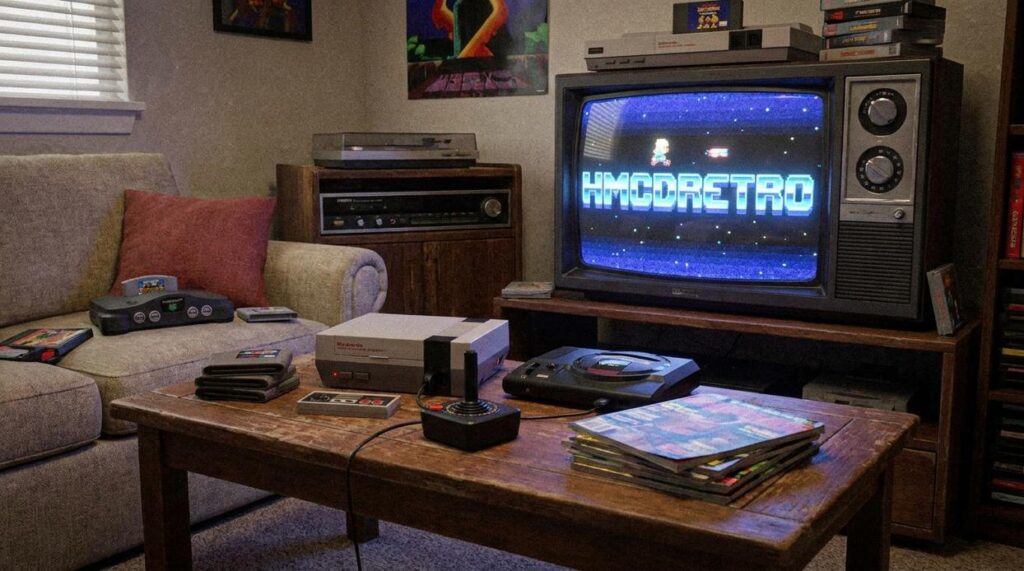
I’ve been playing and collecting classic games for over twenty years now. And I still remember how confusing it all felt at first.
You’ve probably seen the #retrogaming hashtag everywhere. Maybe you’re curious about revisiting games from your childhood or discovering what you missed. But where do you even start?
Here’s the thing: the retro gaming world looks complicated from the outside. Hundreds of consoles. Thousands of games. Multiple ways to play. A community that speaks in acronyms you don’t understand yet.
It doesn’t have to be that hard.
I spent two decades figuring out what works and what doesn’t. I’ve restored consoles, hunted down rare cartridges, and tested every way you can play these classics today.
This guide cuts through the confusion. I’ll show you what retro gaming actually means (it’s not just old Nintendo games). You’ll learn the best ways to start playing without spending a fortune or filling your house with equipment.
We’ll also talk about how to connect with other players who love this stuff as much as you’re about to.
No gatekeeping. No assumption that you already know the difference between a CRT and an upscaler.
Just a straightforward path into a hobby that’s kept me hooked for decades.
What Defines a ‘Retro’ Game? Understanding the Eras
Walk into any game store and ask what makes a game retro.
You’ll get a dozen different answers.
Some people say anything before HD graphics counts. Others draw the line at disc-based systems. And a few insist that if you can still buy it at GameStop, it’s not retro yet.
Here’s what I tell people who ask me.
The retro gaming community has pretty much settled on three core generations. The 8-bit era, the 16-bit era, and the 32/64-bit era. These aren’t just random numbers. They represent real shifts in how games looked and played.
The Core Retro Generations
The 8-bit generation gave us the NES. Simple graphics but tight gameplay that still holds up today (and yes, Mega Man 2 is still brutally hard).
Then came 16-bit with the SNES and Genesis. This is where pixel art hit its peak. The colors popped. The soundtracks got richer. Games like Chrono Trigger and Streets of Rage 2 defined what side-scrollers could be.
The 32/64-bit era brought us the N64 and original PlayStation. 3D worlds replaced sprites. We got analog sticks and CD soundtracks. Final Fantasy VII made people cry over polygons.
Now here’s where it gets tricky.
Some folks argue the PS2 and GameCube are too recent to be retro. They came out in the early 2000s. That’s not that long ago, right?
But think about it. The PS2 launched over 20 years ago. Kids who played it are adults now with their own kids.
I recommend thinking about retro as a rolling window. What felt modern 15 to 20 years ago starts feeling retro today. It’s why you’ll see retro gaming hmcdretro communities debating whether the Xbox 360 counts yet.
My advice? Don’t get hung up on exact cutoff dates. If a game feels like a throwback to you and captures that nostalgic pull, it’s retro enough.
How to Start Playing: Your Three Paths to the Past
Last week a guy walked into my shop holding a Game Boy Color he’d just bought online for sixty bucks.
He wanted to know if he got ripped off.
I powered it on. Screen was perfect. Sound worked. No corrosion on the battery contacts. I told him he got a steal.
Then he asked me the real question. Was this the best way to play old games or should he have done something else?
Here’s what I told him. There’s no single right answer. It depends on what you want from retro gaming hmcdretro.
Some people say emulation ruins the experience. That you’re not really playing the game unless you’re holding original hardware. Others think spending hundreds on old consoles is ridiculous when you can play the same games for free on your laptop.
Both camps miss the point.
Each path has its place. You just need to pick the one that fits your situation.
Path 1: The Authentic Experience
I won’t lie to you. There’s something special about playing on original hardware.
The weight of a real SNES controller in your hands. The click of cartridge pins making contact. Zero input lag because there’s no digital conversion happening between your button press and what happens on screen.
Plus you get to build a collection. Physical games you can touch and display.
But it costs money. A clean Super Nintendo runs about $100 these days. Popular games? Expect to pay $30 to $200 depending on the title. And if you want the picture to look right, you need a CRT television. Those flat screens introduce lag and make the graphics look wrong.
You also need space. Consoles stack up fast when you’re collecting multiple generations.
Path 2: The Convenient Approach
Emulation lets you play thousands of games on devices you already own.
Your laptop. Your phone. A Raspberry Pi that costs forty bucks. You get save states so you can pause anywhere. Screen filters that recreate the CRT look. Access to games that would cost you a mortgage payment to buy physically.
The setup can get tricky if you’re not comfortable with computers. And yeah, there’s a legal gray area around downloading ROMs even if you own the original games.
But once it’s running? You have an entire library at your fingertips.
Path 3: The Modern Method
Nintendo Switch Online gives you NES and SNES games for a monthly fee. PlayStation Plus has PS1 classics. Companies keep releasing mini consoles loaded with games.
It’s legal. It’s easy. You plug it in and play.
The downside? Limited selection. You get what they give you. Some of these services have noticeable input lag too, which matters if you’re playing anything that requires precise timing.
That guy with the Game Boy? He went with Path 1 because he wanted something to hold. Something real.
Your path might be different. Pick the one that makes sense for how you want to play.
The #RetroGaming Hall of Fame: Essential Games to Play First
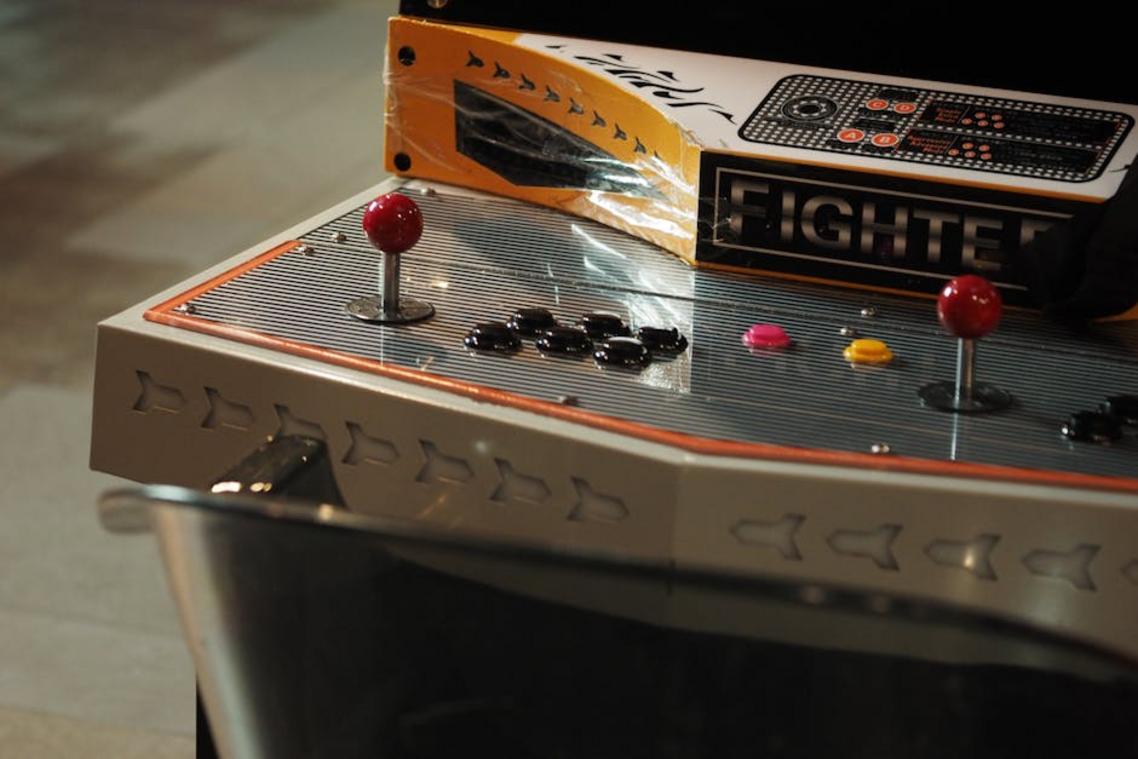
You want to know where to start.
I run a retro gaming shop in Washington, Maryland and people ask me this question every single day. They walk in overwhelmed by shelves packed with cartridges and wonder which games are actually worth their time.
Here’s what I tell them.
For the Platformer Fan (16-Bit Era)
Start with Super Mario World or Sonic the Hedgehog 2.
Some people say these games are overrated. That we only love them because of nostalgia. But that completely misses why they still hold up.
The level design in Super Mario World teaches you without tutorials. Each stage introduces a concept and lets you master it. The physics feel perfect because Nintendo spent years refining how Mario moves and jumps.
Sonic 2 does something different. It gives you speed but makes you earn it by learning the levels. Rush through blindly and you’ll hit spikes. Learn the layout and you’ll fly.
I think we’ll see more modern games try to copy this approach. But they’ll struggle because these classics nailed something that’s hard to replicate.
For the Adventure Seeker (8 & 16-Bit)
The Legend of Zelda: A Link to the Past changed everything.
It dropped you in a world and said figure it out. No quest markers. No hand holding. Just exploration and discovery.
Super Metroid did the same thing but with a darker atmosphere. You felt alone on that alien planet. The game guided you through smart design instead of obvious instructions.
Both games trusted you to be smart. That’s rare even today.
For the RPG Enthusiast (16-Bit Golden Age)
Chrono Trigger or Final Fantasy VI. Pick one.
Chrono Trigger tells a time travel story that actually makes sense (mostly). The combat stays fresh because you’re constantly switching party members and learning new combo attacks.
Final Fantasy VI has more characters but somehow makes you care about all of them. The opera scene alone proves games could be art back in 1994.
My prediction? We’re going to see a wave of new RPGs that try to recapture this era’s magic. Some will succeed. Most won’t because they’ll add too much complexity.
For a Quick Arcade Fix
Street Fighter II Turbo or Tetris.
Street Fighter II created the fighting game genre we know today. Every character plays different and you can spend years mastering just one.
Tetris is Tetris. It’s perfect. Nothing else to say.
These old school games hmcdretro collectors hunt for aren’t just nostalgia bait. They’re masterclasses in game design that modern developers still study.
Start with any game on this list and you’ll understand why.
Joining the Community: How to Use the #RetroGaming Hashtag
You’ve got your collection. You’ve beaten a few classics. Now what?
Here’s the truth. Playing retro games alone is fun. But connecting with people who get why you just spent three hours trying to beat Battletoads? That’s where the real magic happens.
The #RetroGaming hashtag is your gateway to thousands of collectors and players who share your obsession.
I’m going to show you exactly where to find them and what to share.
Instagram is where you show off. Post that mint condition SNES you just scored. Share your game room setup. People love seeing collections and they’ll give you props for your finds.
Reddit’s r/retrogaming is for the deep stuff. Ask which version of Castlevania holds up best. Get advice on fixing that flickering NES. These folks know their hardware inside and out.
YouTube is your classroom. Watch restoration projects. Learn from video essays breaking down game design. See how online games have advanced hmcdretro and what that means for retro gaming hmcdretro enthusiasts today.
What should you actually post?
Share your wins. Beat Contra without the Konami code? Post it. Found a rare title at a yard sale? Show it off. Looking for recommendations on what to play next? Just ask.
One thing though.
The emulation versus original hardware debate gets heated. Some people swear you need a CRT and original cartridges. Others say emulation preserves gaming history. Both sides have valid points.
My advice? Respect how others play. We’re all here because we love these games. That’s what matters.
Your Adventure in Gaming History Awaits
I get it. Retro gaming can feel like a closed door.
The hardware is old. The terminology is confusing. You’re not even sure where to start.
But here’s the thing: you now have a clear map to navigate this world. From understanding what retro gaming actually means to playing your first classic game.
What once seemed inaccessible is now wide open. You’ve got multiple paths in: original hardware, emulation, or modern re-releases. Pick the one that fits your budget and comfort level.
The solution works because it’s simple. Choose your path. Grab a game from the Hall of Fame. Start playing.
That’s it.
You don’t need to be a collector or a tech expert. You just need to pick something and dive in.
Here’s what I want you to do: Pick one game that caught your eye. Fire it up tonight. Then share your experience with the #retrogaming community online.
You’re part of this now. Welcome to the club.
 Founder & Creative Director
dylan1997 is the visionary behind HMCD Retro, driven by a deep passion for classic gaming and digital nostalgia. He founded the platform to preserve and celebrate retro gaming culture in a modern, accessible way. With a strong eye for storytelling and design, dylan1997 leads the creative direction and overall content strategy. His expertise spans game analysis, industry trends, and community building. He is committed to delivering authentic, high-quality content for dedicated gamers. Through his leadership, HMCD Retro has evolved into a trusted hub for retro enthusiasts. dylan1997 continues to shape the platform’s voice and long-term vision.
Founder & Creative Director
dylan1997 is the visionary behind HMCD Retro, driven by a deep passion for classic gaming and digital nostalgia. He founded the platform to preserve and celebrate retro gaming culture in a modern, accessible way. With a strong eye for storytelling and design, dylan1997 leads the creative direction and overall content strategy. His expertise spans game analysis, industry trends, and community building. He is committed to delivering authentic, high-quality content for dedicated gamers. Through his leadership, HMCD Retro has evolved into a trusted hub for retro enthusiasts. dylan1997 continues to shape the platform’s voice and long-term vision.