I’ve been collecting classic video games for years and I can tell you this: finding the real deal is getting harder.
You’re not just looking for old games. You want pieces of gaming history that actually mean something. Games that changed how we think about technology and entertainment.
Here’s the problem. Most collections treat these games like yard sale leftovers. No context. No care. Just cartridges in a bin.
That’s not what you came here for.
retro games hmcdretro exists because classic games deserve better. Each title in our collection tells a story about where gaming has been and why it matters.
I’m going to show you what makes certain eras significant. You’ll see why some games are cultural artifacts worth preserving and others are just taking up shelf space.
This isn’t about nostalgia (though that’s a nice bonus). It’s about understanding what you’re actually holding when you pick up a game from 1985 or 1993.
You’ll learn which titles shaped entire genres. Which ones pushed hardware to its limits. Which ones are worth your time and money.
No fluff about the good old days. Just the historical context you need to build a collection that actually matters.
The Golden Age: Arcade Origins and the Dawn of an Industry
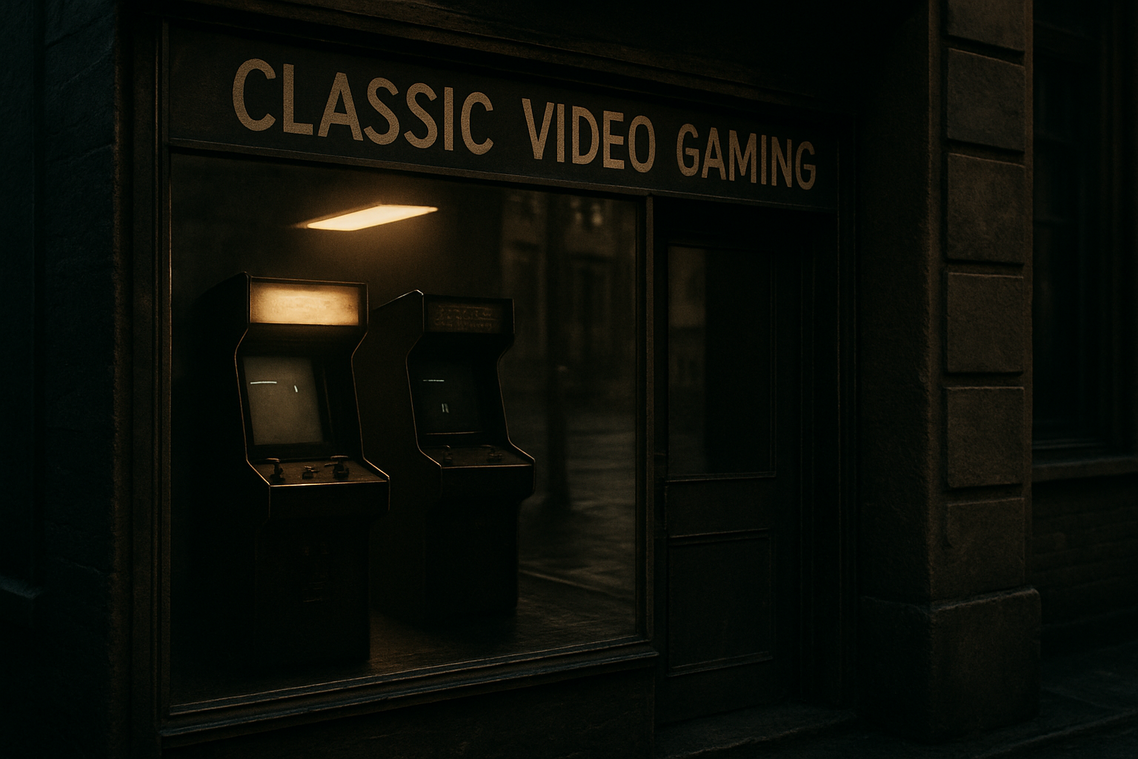
Walk into any arcade between 1978 and 1983 and you’d hear it.
The symphony of bleeps and bloops. Quarters clinking. Kids shouting about high scores.
That was the golden age.
Some people say arcades were just a fad. That they were destined to fade once home consoles got better. They point to the crash of ’83 and say the whole thing was overblown.
But here’s what they don’t get.
Those arcade cabinets CHANGED everything. They didn’t just entertain us. They built the foundation for every game you play today.
I remember the first time I saw Pac-Man in 1980. The cabinet was surrounded by a crowd three deep. Everyone wanted their turn to chase ghosts and munch dots. Within two years, Pac-Man wasn’t just a game anymore. It was on lunch boxes and Saturday morning cartoons.
Donkey Kong hit arcades in 1981 and introduced us to a plumber named Mario (though we didn’t know how big he’d become yet).
The hardware back then was simple compared to what we have now. But that simplicity forced designers to focus on what mattered. Tight controls. Clear objectives. One more try syndrome.
You’d pump in a quarter and get maybe three minutes of gameplay if you were good. But those three minutes? Pure magic.
The high score board was EVERYTHING. It turned single-player experiences into community competitions. You’d come back day after day trying to knock “AAA” off the top spot.
At hmcdretro, I’ve collected dozens of these arcade classics. Each one represents a piece of gaming history that shaped how we think about game design today.
These weren’t just games. They were the birth of an industry.
The 8-Bit Revolution: Bringing the Arcade Experience Home
You had two choices in 1985.
Keep feeding quarters into arcade machines. Or bring the games home.
I remember when that decision actually meant something. Arcades had the graphics and the speed. Home consoles? They were toys that couldn’t compete.
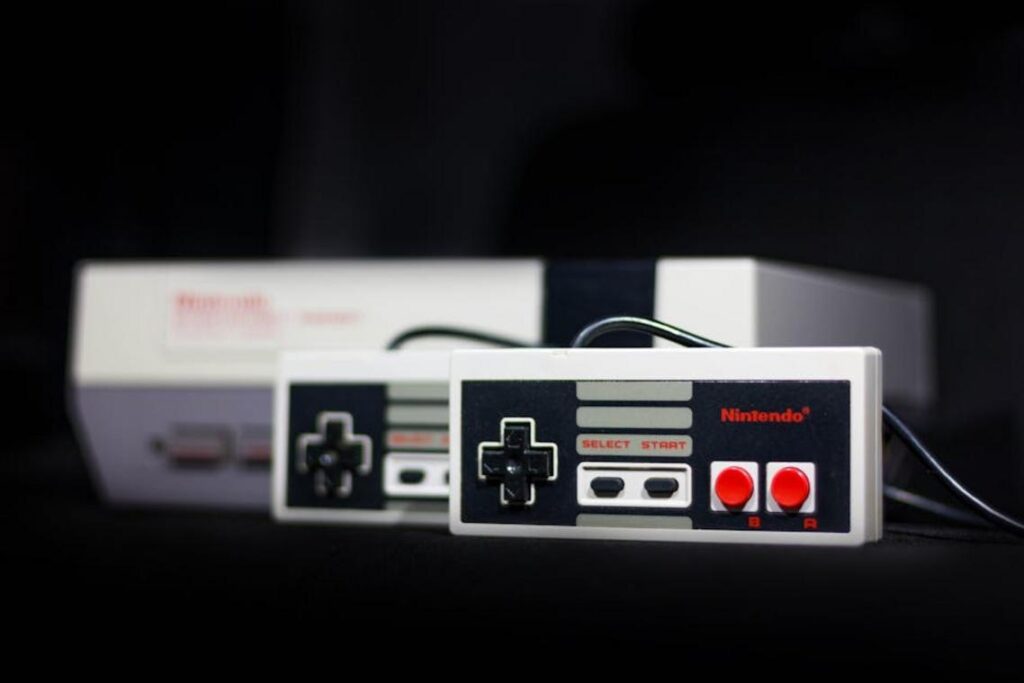
Then the NES showed up and changed everything.
The crash of 1983 nearly killed video games. Too many terrible titles flooded the market. Atari’s E.T. became the poster child for rushed garbage. Stores couldn’t give cartridges away.
Some people say the industry deserved to die. That it got greedy and forgot about making good games.
They’re half right.
But here’s what they miss. The crash didn’t happen because people stopped wanting video games. It happened because nobody was controlling quality.
Nintendo figured that out. They locked down their system with a security chip. If you wanted to make NES games, you played by their rules.
Compare that to the free-for-all before. Atari let anyone publish anything. The result? Shelves packed with unplayable junk that killed consumer trust.
Nintendo’s approach? Strict approval process. Limited releases per publisher. Quality over quantity.
It worked.
Super Mario Bros. sold the system to families who thought gaming was dead. The side-scrolling felt smooth. The controls responded. You could actually finish levels without wanting to throw the controller.
Then Zelda came along and blew open what home consoles could do. An entire world to explore. Secrets hidden everywhere. No quarters required.
Here’s the real difference between arcade and home gaming:
- Arcades wanted your money every three minutes
- Home cartridges let you master games at your own pace
- You could save your progress and come back
That last part mattered more than people realize.
RPGs like Dragon Warrior needed that save feature. You couldn’t build a 20-hour adventure in an arcade. But at home? You could spend weeks leveling up and exploring.
The 8-bit era at old school gaming hmcdretro defined what we still play today. Platformers. Action-adventure. Turn-based RPGs. All of it started here.
Walk into HMCD Retro and you’ll see those original cartridges. They’re not just games. They’re the foundation of everything that came after.
Some collectors want them for nostalgia. Fair enough.
But the real reason to own these? You’re holding the moment when gaming moved from arcades to living rooms. When quarters became cartridges and gaming became something you could actually own.
That shift changed everything.
The 16-Bit Console Wars: A Leap in Storytelling and Artistry
You remember the playground arguments.
SNES or Genesis. Mario or Sonic. There was no middle ground.
But here’s what made the early 1990s different from every console generation before it. This wasn’t just about who had the cooler mascot. The 16-bit era changed what video games could actually be.
I’m talking about real technical power that let developers paint worlds we’d never seen before.
The jump to 16-bit processing meant games could display thousands of colors instead of a few dozen. Parallax scrolling made backgrounds move in layers, creating depth that felt almost three-dimensional. Sound chips could produce music that didn’t sound like bleeps and bloops anymore.
Some collectors say the 8-bit era was purer. Simpler. They argue that all these bells and whistles just distracted from tight gameplay.
And you know what? I see their point. There’s something beautiful about the constraints of early NES games.
But they’re missing what happened when developers got more tools to work with.
Games like Chrono Trigger didn’t just look better. They told stories that stuck with you. Characters had arcs. Choices mattered. You weren’t just rescuing a princess anymore. You were dealing with time travel, mortality, and sacrifice.
Final Fantasy VI gave us an ensemble cast where almost everyone had their own backstory and motivations. These weren’t cardboard cutouts. They felt real.
This is where retro games hmcdretro really shines. When you hold a physical SNES or Genesis cartridge, you’re holding a piece of that transformation. The box art alone tells you how much care went into these releases.
The 16-bit generation represents the peak of 2D game design. Developers had mastered the format right before everything went 3D. What you get are games that still look gorgeous today because they weren’t trying to be realistic. They were trying to be art.
That’s why collectors hunt for these cartridges. It’s not just nostalgia. It’s owning a snapshot of the moment when games grew up and became something more than entertainment. They became experiences worth preserving.
Why Collect Vintage Games? Preserving Digital Heritage
You know what disappears faster than you think?
Games.
Not the franchises. Not the IP. The actual physical games themselves.
I opened my shop back in 2019 and I’ve watched it happen. People come in looking for titles they played as kids and they’re shocked at how hard some are to find now. Cartridges that sat in bargain bins fifteen years ago are gone.
Some collectors say this is all nostalgia. That we’re just chasing childhood memories and pretending it’s something deeper.
Fair point.
But here’s what that argument misses.
The Physical Connection Matters
When you hold an original NES cartridge, you’re touching the same object someone held in 1987. The same plastic. The same label art. You blow on the contacts the same way (even though we all know it doesn’t actually help).
That’s not nostalgia. That’s a direct line to history.
Digital downloads don’t give you that. They’re convenient, sure. But you can’t feel the weight of a Game Boy in your hands through an emulator. You can’t flip through a manual that smells like the ’90s.
I’ve seen it change how people understand games. Someone picks up a copy of Metroid on the original hardware and suddenly they get why exploration felt so different back then. The limitations shaped the design.
You can read about it online. Or you can experience it yourself with retro games hmcdretro collectors have been preserving for decades.
Here’s what a physical collection actually teaches you:
• How developers worked around hardware constraints
• Why certain genres dominated specific eras
• How controller design influenced gameplay mechanics
After spending six months comparing original releases to modern ports, I noticed something. The ports are smoother, prettier, faster. But they lose something in translation.
The original Castlevania on NES feels punishing because of the stiff controls. That wasn’t a bug. That was the whole point. The game was designed around those exact limitations.
Strip that away and you’re playing something different.
Your Gateway to Gaming’s Past
I built HMCD Retro because these games matter.
They’re not just pixels on a screen. They’re the DNA of everything you play today.
Every modern shooter owes something to Doom. Every platformer learned from Mario. Every RPG studied what Zelda did right.
You came here to understand why classic gaming is worth your time. Now you know it’s about more than nostalgia.
These cartridges and discs are artifacts. They tell the story of how we got from Pong to the PlayStation 5. Owning them means you’re preserving a piece of digital history that shaped our world.
Here’s what I want you to do: Browse our complete collection at hmcdretro. Find the games that defined an era. Start building your personal gaming museum.
We’re located at 4819 Adams Avenue in Washington, Maryland. Every title we stock has been tested and verified.
Start Your Collection Today
Your historical journey starts right now.
The games that built this industry are waiting for you. Pick the ones that matter most and bring them home.
Visit hmcdretro and discover what you’ve been missing.
 Founder & Creative Director
dylan1997 is the visionary behind HMCD Retro, driven by a deep passion for classic gaming and digital nostalgia. He founded the platform to preserve and celebrate retro gaming culture in a modern, accessible way. With a strong eye for storytelling and design, dylan1997 leads the creative direction and overall content strategy. His expertise spans game analysis, industry trends, and community building. He is committed to delivering authentic, high-quality content for dedicated gamers. Through his leadership, HMCD Retro has evolved into a trusted hub for retro enthusiasts. dylan1997 continues to shape the platform’s voice and long-term vision.
Founder & Creative Director
dylan1997 is the visionary behind HMCD Retro, driven by a deep passion for classic gaming and digital nostalgia. He founded the platform to preserve and celebrate retro gaming culture in a modern, accessible way. With a strong eye for storytelling and design, dylan1997 leads the creative direction and overall content strategy. His expertise spans game analysis, industry trends, and community building. He is committed to delivering authentic, high-quality content for dedicated gamers. Through his leadership, HMCD Retro has evolved into a trusted hub for retro enthusiasts. dylan1997 continues to shape the platform’s voice and long-term vision.