I remember the first time I heard that 8-bit chime and watched pixels dance across a CRT screen.
You’re here because modern games don’t hit the same way. All the photorealistic graphics and sprawling open worlds can’t match that pure rush you got from a well-designed classic.
Here’s the thing: those old school games weren’t just fun because we were kids. They were built different.
I’ve been running HMCD Retro here in Washington, and I see it every day. People walk in looking for something they can’t find in today’s releases. That instant pick-up-and-play magic. The kind of game that doesn’t need a tutorial or a 50GB download.
This guide covers the titles that still hold up. Not every retro game aged well (most didn’t), but the ones that did? They’re still worth your time.
You’ll discover which classics are actually worth playing today and how to experience them without digging through your parents’ attic.
We’re talking about games that defined what interactive entertainment could be. The ones that proved you don’t need a massive budget or cutting-edge tech to create something people remember decades later.
No rose-tinted glasses here. Just the games that earned their place in history.
What Truly Defines a ‘Classic’ Retro Game?
Here’s what most people get wrong.
They think a game becomes a classic just because it’s old. Like hitting 20 or 30 years automatically earns it some badge of honor.
That’s not how it works.
I’ve seen plenty of games from the 80s and 90s that nobody remembers. They came out, people played them for a week, and then they disappeared. Age doesn’t make something classic.
So what does?
The Games That Changed Everything
A real classic did something first. Or it did something so well that every game after it had to measure up.
Take Super Mario Bros. It didn’t invent platforming, but it nailed the physics. The way Mario moves, the way he jumps, the way momentum works. Developers are still copying that formula today.
Or look at The Legend of Zelda. Open world exploration wasn’t new, but Zelda made it feel like an adventure. You could go almost anywhere from the start. No hand holding. Just you, a sword, and a world to figure out.
These games set the bar. Everything that came after had to be compared to them.
Why You Still Hum Those Tunes
Close your eyes and think about the first level of Mega Man 2.
You can hear it, right?
That’s the power of chiptune music and 8-bit art. The limitations actually made things more memorable. Composers had maybe five sound channels to work with. Artists had a tiny color palette.
But those restrictions forced creativity. Every pixel mattered. Every note had to count.
The result? Soundtracks and visuals that stuck in your brain for decades. You can spot a classic retro game in half a second just from the art style.
One More Round Won’t Hurt
You know what separates a classic from everything else?
The gameplay loop.
I’m talking about that feeling when you die on level 3 for the tenth time and immediately hit continue. No frustration. Just the need to try again because you know you can do better.
Games at old school games hmcdretro prove this every day. People walk in planning to play for five minutes and leave an hour later. These titles were built on tight mechanics and instant feedback. You mess up, you know why. You succeed, you feel it.
That’s why people still speedrun games from 1987. The core gameplay holds up because it was built right from the start.
Some folks argue that we only remember these games fondly because of nostalgia. That if you played them fresh today, they’d feel clunky and outdated.
And sure, some mechanics haven’t aged well. But the classics? They still play great. I’ve watched teenagers pick up a controller and get hooked on games older than their parents.
That’s not nostalgia. That’s just good game design.
A Journey Through the Golden Eras of Gaming
You know that feeling when you boot up an old game and everything just clicks?
I’m talking about the games that made us fall in love with this medium in the first place.
Let me walk you through the eras that shaped everything we play today.
The 8-Bit Revolution (The NES Era)
This is where it all started for most of us.
The industry had crashed hard in 1983. People thought video games were done. Then Nintendo showed up and proved everyone wrong.
What made these games special? They were simple but brutally hard. No hand-holding. No tutorials that lasted an hour. You figured it out or you didn’t.
Super Mario Bros. 3 gave us a world map and power-ups that actually changed how you played. Metroid let you explore in any direction (which was wild back then). Mega Man 2 made you choose your own path through eight robot masters.
These weren’t just games. They were the blueprint.
The 16-Bit Console Wars (SNES vs. Genesis)
Then things got serious.
Sega went after Nintendo hard. “Genesis does what Nintendon’t” wasn’t just marketing. It was a challenge.
This era was about refinement. Games looked better. They sounded better. Composers could actually create music that didn’t sound like bleeps and bloops.
Sonic the Hedgehog 2 moved faster than anything we’d seen. A Link to the Past showed us what adventure games could be with better hardware. Chrono Trigger proved RPGs could have multiple endings and time travel that actually made sense.
The competition made both companies better. We won.
The Birth of 3D (N64 & PlayStation)
This is where everything changed.
Moving from 2D sprites to 3D polygons wasn’t just a graphics upgrade. It completely rewired how developers thought about game design.
Super Mario 64 gave you a camera you could control and a world you could explore from any angle. Final Fantasy VII brought cinematic storytelling to consoles (those cutscenes blew our minds). Ocarina of Time figured out how to make combat work in three dimensions with Z-targeting.
Some people hated the jump to 3D. They said it looked ugly. That 2D was more artistic.
But here’s what they missed. 3D opened doors that 2D couldn’t. You could create spaces that felt real. Worlds you could get lost in.
At hmcdretro old school gaming by harmonicode, we celebrate all these eras. Because each one taught us something new about what games could be.
The Enduring Appeal: Why We Still Play Retro Games
You know what nobody talks about?
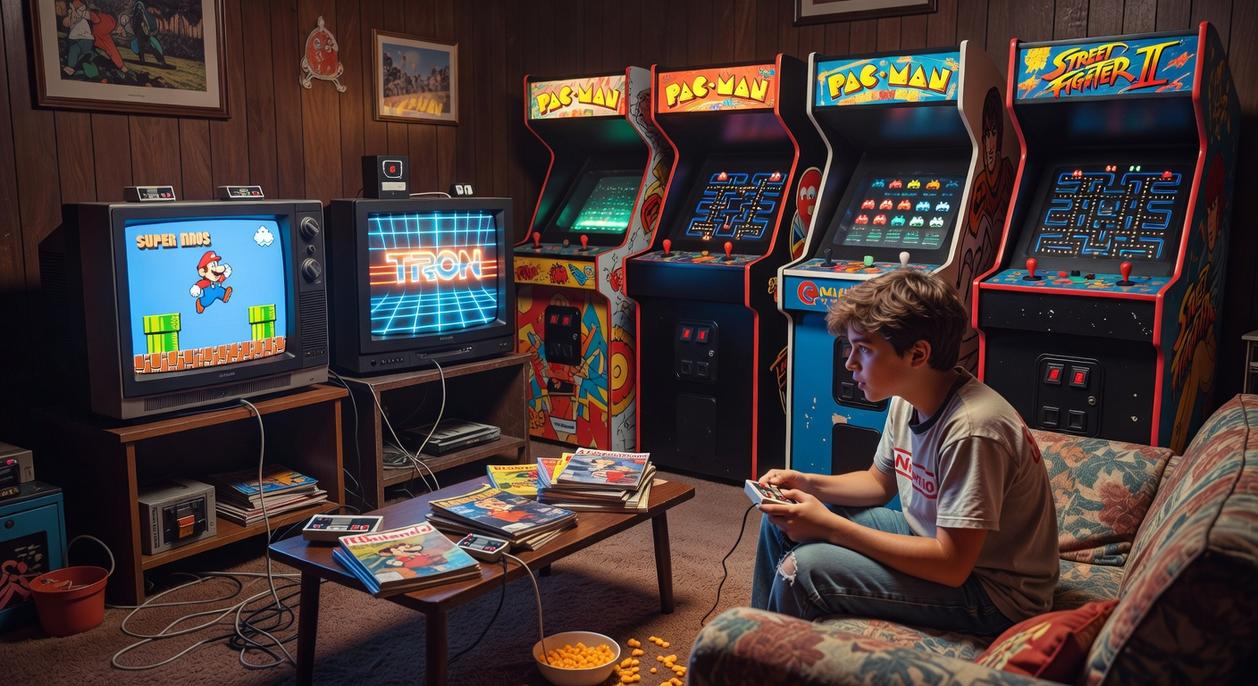
The fact that I can boot up Contra and be shooting aliens in under 10 seconds. No updates. No character customization screens. No 45-minute tutorial teaching me how to jump.
Just pure game.
Modern titles want to be everything. Open worlds. Skill trees. Crafting systems. And sure, some of that’s great. But sometimes I just want to play without reading a manual first.
Here’s what most gaming sites won’t tell you.
They say nostalgia is the only reason we go back to these games. That we’re just chasing memories of Saturday mornings and pizza parties.
That’s only half true.
Yeah, firing up Super Mario Bros. 3 takes me back to my cousin’s basement in 1990. I can almost smell the carpet and hear my aunt calling us for dinner. These games are time machines (the good kind, not the confusing sci-fi kind).
But I also play games I never touched as a kid.
I picked up Castlevania: Symphony of the Night for the first time last year. No childhood memories attached. Still couldn’t put it down.
The real reason these games stick around?
They respect your time and test your skills.
Retro gaming hmcdretro isn’t about graphics or voice acting. It’s about tight controls and fair challenges. When you die in Mega Man, you know exactly why. When you finally beat that boss, you earned it.
No quest markers. No difficulty settings that let you breeze through. Just you and the game.
That shared language matters too. When someone mentions the Konami Code, gamers from 15 to 50 all nod. These old school games hmcdretro built the foundation for everything that came after.
How to Play These Timeless Classics Today
You want to play old school games but you’re not sure where to start.
I’ll be honest with you. The easiest way is through official digital collections.
Nintendo Switch Online gives you access to NES and SNES titles for a monthly fee. PlayStation Plus has its Classics Catalog. And publishers keep releasing their own compilations like Mega Man Legacy Collection and Sonic Origins.
It’s convenient. But here’s my take on it.
These services are fine for casual nostalgia trips. They work. You can play them. But something feels off to me about scrolling through a menu to pick Contra when I remember blowing into cartridges and hoping they’d work.
The mini consoles are better. The NES Classic and SNES Classic. The Sega Genesis Mini. They’re plug-and-play and they come with curated game lists that actually make sense.
I like these because someone put thought into what games matter.
Now some people will tell you that playing on original hardware is pointless. Too expensive. Too much hassle. Why bother when emulation exists?
But they’re missing the point entirely.
Playing on a CRT television with an original cartridge? That’s the way these games were meant to be experienced. The colors look right. The response time feels right. There’s a weight to it that digital collections can’t replicate.
(Yes, I know how that sounds. But try it once and you’ll get it.)
Here’s something most people overlook though.
Modern indie games capture that classic spirit better than most rereleases. Shovel Knight nails the NES aesthetic. Celeste feels like a lost SNES gem. Stardew Valley channels 16-bit farming sims perfectly.
These prove that retro design principles still work today.
The Pixels That Shaped Our World
You came here to understand what makes retro games timeless.
We’ve walked through the golden eras together. We’ve seen why these games still grab us decades later.
Here’s the truth: the classic touch isn’t about old technology. It’s about design that works and gameplay that doesn’t need a tutorial to feel right.
These games create memories that stick with you.
I’ve watched people light up when they hear that first 8-bit melody. When they see those chunky pixels move across the screen. It’s not nostalgia alone doing the work.
It’s the purity of it all.
Modern games are great but sometimes you need something different. You need a game that respects your time and rewards your skill without the extra layers.
old school games hmcdretro brings you exactly that experience.
Whether you’re coming back to an old favorite or trying a legend for the first time, the move is simple.
Power on. Press start. Let yourself feel what made these games special in the first place.
The magic is still there waiting for you.
 Founder & Creative Director
dylan1997 is the visionary behind HMCD Retro, driven by a deep passion for classic gaming and digital nostalgia. He founded the platform to preserve and celebrate retro gaming culture in a modern, accessible way. With a strong eye for storytelling and design, dylan1997 leads the creative direction and overall content strategy. His expertise spans game analysis, industry trends, and community building. He is committed to delivering authentic, high-quality content for dedicated gamers. Through his leadership, HMCD Retro has evolved into a trusted hub for retro enthusiasts. dylan1997 continues to shape the platform’s voice and long-term vision.
Founder & Creative Director
dylan1997 is the visionary behind HMCD Retro, driven by a deep passion for classic gaming and digital nostalgia. He founded the platform to preserve and celebrate retro gaming culture in a modern, accessible way. With a strong eye for storytelling and design, dylan1997 leads the creative direction and overall content strategy. His expertise spans game analysis, industry trends, and community building. He is committed to delivering authentic, high-quality content for dedicated gamers. Through his leadership, HMCD Retro has evolved into a trusted hub for retro enthusiasts. dylan1997 continues to shape the platform’s voice and long-term vision.