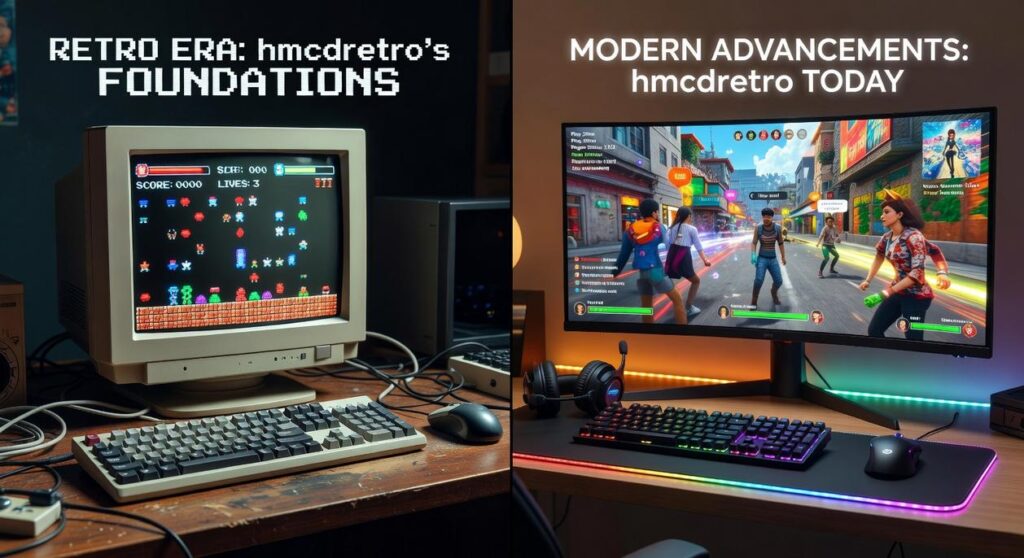
I still remember the first time I fired up Pac-Man on my phone and thought, how did we get here?
You’re probably wondering the same thing. These games are decades old. They were built for chunky CRT screens and cartridges you had to blow dust out of. Yet somehow they’re everywhere online now.
Here’s what happened: retro gaming didn’t just survive the shift to digital. It completely transformed.
I’ve been tracking this evolution at hmcdretro for years. What started as scrappy fan projects and emulator sites turned into a legitimate business model that major platforms now fight over.
This article walks you through the entire journey. From those early emulator communities to the subscription services that now package classic games alongside modern titles.
You’ll see how the technology changed, how the business models evolved, and why games from the 80s and 90s are competing (and sometimes winning) against today’s AAA releases.
We’re breaking it down chronologically. Each major shift. Each new platform. Each moment that pushed retro gaming further into the mainstream.
No nostalgia goggles. Just the real story of how pixels became playlists.
The Foundation: Emulation and the Rise of Digital Preservation
Remember when your favorite band’s old albums weren’t on streaming services?
You had two choices. Hunt down used CDs at garage sales or go without.
That’s where gamers were in the late 1990s. The games we loved as kids were gathering dust. The consoles that played them were dying. And the companies that made them? They’d moved on.
Then something changed.
Emulation hit the scene like a lifeboat for drowning memories.
Think of it this way. An emulator is like a translator who doesn’t just speak another language but can BECOME someone from that culture. It lets your PC pretend it’s a Super Nintendo or a Sega Genesis. Not just mimic it. Actually run the same code the same way.
Some people say emulation was just piracy with extra steps. That sharing ROMs (the game files) on early forums was theft, plain and simple. And legally? They had a point. Copyright law didn’t care about nostalgia.
But here’s what that argument misses.
Publishers weren’t selling these games anymore. They weren’t even acknowledging they existed. You literally couldn’t buy them if you wanted to (and believe me, we wanted to).
The community stepped up. Forums like Zophar’s Domain and EmuParadisc became digital libraries. People ripped cartridges they owned and shared them. Others wrote guides. Some coded better emulators.
It was preservation disguised as rebellion.
And you know what it proved? That THOUSANDS of players would crawl through sketchy download sites and figure out complicated software just to play 16-bit games again.
That’s not a niche hobby. That’s a market screaming to exist.
The demand was always there. Emulation just made it impossible to ignore. Even as online games have advanced hmcdretro and modern gaming in general, that hunger for classic experiences never faded.
Publishers eventually noticed. But the fans got there first.
Going Legit: Official Re-releases and the Dawn of Digital Storefronts
Something changed in the mid-2000s.
Game publishers looked at their dusty archives and realized they were sitting on gold mines. Old games that hadn’t made money in decades could suddenly print cash again.
Why? Because people wanted them.
The first wave hit with Nintendo’s Virtual Console in 2006. Then Xbox Live Arcade. Then the PlayStation Store. Suddenly you could buy Super Mario Bros or Sonic the Hedgehog without hunting down a working NES or Genesis.
No blown cartridges. No yellowed plastic. Just click and play.
But here’s where it gets confusing. Not all re-releases are the same.
A PORT is the simplest thing. Take the old game and copy it to new hardware. That’s it. Same graphics, same everything. Just runs on your modern console.
A REMASTER goes further. The developers update the graphics to HD, fix old bugs, and add quality-of-life improvements. Maybe they tweak the controls or add a save system. The core game stays the same but it looks and feels better.
A REMAKE? That’s when they rebuild the whole thing from scratch. New engine, new graphics, sometimes even new gameplay. Think Resident Evil 2 Remake. Same story and vibe but completely reconstructed.
Now some people say this killed the charm of retro gaming. That hunting for original hardware was part of the experience.
And sure, there’s something special about playing on authentic equipment.
But that argument ignores reality. Original cartridges cost a fortune now. Working consoles break down. How online games have advanced hmcdretro accessibility means more people can experience these classics without dropping hundreds of dollars on eBay.
A kid in 2024 can play Chrono Trigger without owning a Super Nintendo. That matters.
The Indie Renaissance: The Rise of ‘Neo-Retro’ Gaming
You know what I love about walking through HMCD Retro these days?
The conversations have changed.
People don’t just ask me about old cartridges anymore. They want to talk about Celeste. About Shovel Knight. About games that look like they belong on a shelf next to Mega Man but play like nothing we had back then.
That’s neo-retro gaming.
It’s not just slapping a pixel filter on something and calling it a day. These are new games built with old aesthetics but designed with everything we’ve learned in the past 30 years.
And honestly? I think it’s some of the best stuff happening in gaming right now.
When Throwback Becomes Innovation
Take Shovel Knight. It looks like it could’ve been on the NES. But try playing it and you’ll notice something. The controls are tighter than anything we had in 1987. The level design teaches you mechanics without a single tutorial popup.
That’s the difference.
Stardew Valley did the same thing. One guy made a farming game that feels like Harvest Moon but fixed every frustrating thing about those old games. You can actually enjoy your virtual farm without wanting to throw your controller.
These developers aren’t copying the past. They’re cherry-picking what worked and leaving behind what didn’t.
Why Small Teams Crush It With Pixels
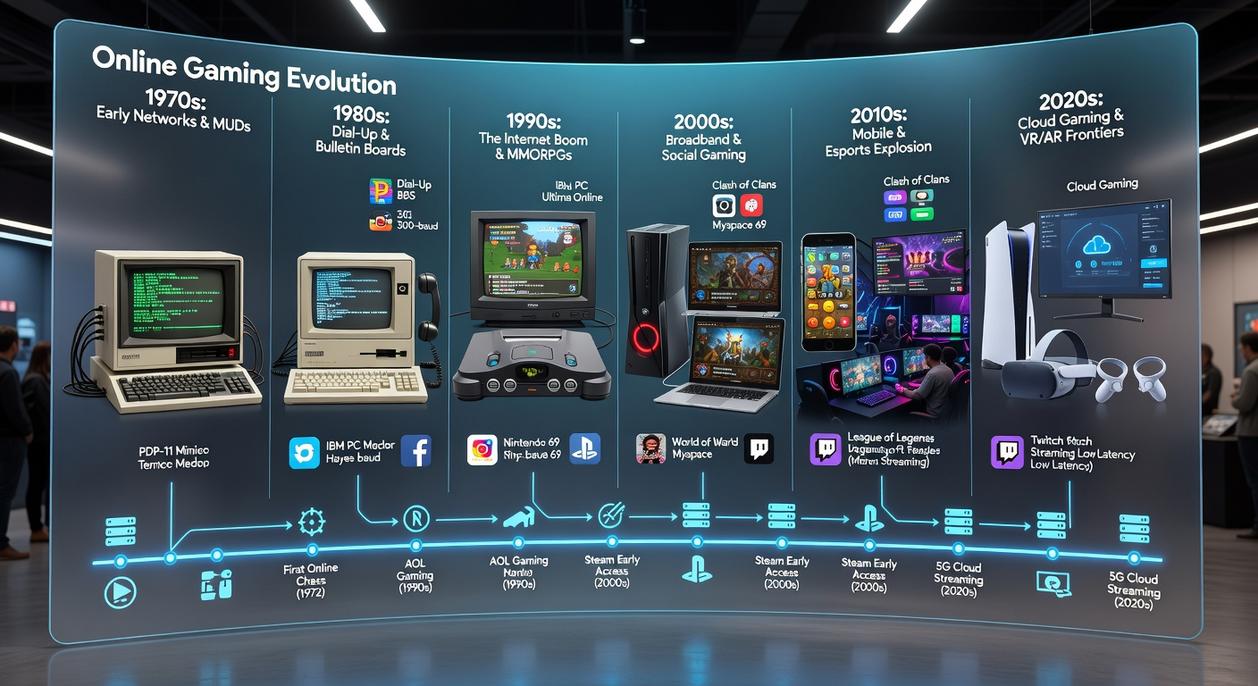
Here’s something most people miss about the 8-bit and 16-bit aesthetic.
It’s not just about nostalgia. It’s about focus.
When you’re not spending two years on photorealistic grass physics, you can pour that energy into making every jump feel perfect. Every dialogue choice matter. Every boss fight memorable.
I’ve watched how online games have advanced hmcdretro and it’s clear that indie teams figured this out fast. They realized that pixel art lets them compete without needing a hundred million dollar budget.
The result? Games with actual personality. Stories that stick with you. Mechanics that feel good instead of just looking expensive.
The Best of Both Worlds
But here’s where it gets interesting.
These neo-retro games look old but they’re not stuck in the past. They’ve got leaderboards. Achievement systems. Discord servers where thousands of players share strategies and speedrun techniques.
Celeste has assist mode so anyone can experience the story. That never would’ve happened in the 90s when difficulty was just gatekeeping with extra steps.
The games respect what made classics great while ditching the parts that aged like milk.
And that’s why they work.
Retro as a Service: Subscription Models and Cloud Gaming
You know what nobody talks about?
How subscription gaming quietly killed the retro game store model. And then brought it back to life in a completely different form.
Walk into HMCD Retro and I’ll show you something interesting. People browse our physical cartridges while simultaneously scrolling through their Xbox Game Pass library on their phones.
They’re not choosing one or the other. They’re doing both.
Here’s what changed.
Services like Xbox Game Pass and Nintendo Switch Online figured out that retro libraries weren’t just nostalgia bait. They were the secret weapon that justified monthly fees. PlayStation Plus Classics followed the same playbook.
Think about it. You pay $10 a month and suddenly you’ve got access to hundreds of games you’d never buy individually.
No downloads. No waiting. Just instant access to titles you forgot existed.
But that’s the mainstream story everyone already knows.
What most people miss is how online games have advanced hmcdretro in ways we didn’t see coming. Cloud services like Antstream Arcade took it further. They let you stream classic arcade games to literally any device. Your phone becomes a portable arcade cabinet.
The economics flipped overnight.
Instead of dropping $30 on a single retro title you might play once, you get an all-you-can-play buffet. It changed discovery completely. People stumble onto games they’d never risk buying.
Some collectors hate this model. They say it devalues physical ownership and turns gaming into a rental economy where you own nothing.
Fair point.
But here’s what they’re missing. This model didn’t replace physical collecting. It created a new pipeline of interested players who eventually want to own their favorites.
I see it every week. Someone plays a game on Game Pass, falls in love, then comes looking for the original cartridge.
The barrier to entry dropped to zero. And that’s exactly what retro gaming needed.
The Future of the Past: What’s Next for Retro Gaming Online?
Retro gaming is like vinyl records.
Everyone said it was dead. Then it came back stronger than anyone expected.
Now I’m watching something interesting happen. The games we grew up with are getting a second life online. But not in the way you might think.
AI is starting to upscale old graphics. Think of it like restoring a classic car but keeping the original engine. The game feels the same but looks sharper on your 4K screen. Controls get smoothed out too without losing that original feel.
You’ve probably seen how online games have advanced hmcdretro communities in ways nobody predicted.
The Classic Tetris World Championship pulls millions of viewers now. Speedrunning communities break down 30-year-old games frame by frame, finding shortcuts the original developers never knew existed.
It’s wild.
Then there’s VR and AR. Imagine walking through the actual castle from your favorite 16-bit adventure. Not a remake. The original game world but you’re inside it.
Some people say all this tech ruins the purity of retro gaming. That we should just play these games exactly as they were.
But here’s what they’re missing. These games are aging out of existence. Cartridges die. Discs rot. Servers shut down.
Preservation isn’t optional anymore. We’re losing pieces of gaming history every year because nobody bothered to archive them properly.
The best strategy games on PlayStation hmcdretro players loved? Some of those are already hard to find in playable condition.
The future of retro gaming isn’t about replacing the old experience. It’s about making sure it survives.
Timeless Design in a Digital World
Retro gaming started as fans trying to keep old games alive.
Now it’s a profitable segment of the online gaming industry. That shift didn’t happen by accident.
The success proves something important. Good gameplay and strong art design don’t age. They work regardless of the technology behind them.
Retro gaming isn’t just nostalgia anymore. It’s a living part of how online games have advanced hmcdretro and shaped what comes next. New developers still study these classics and borrow from them.
You can see this influence everywhere. In indie titles that use pixel art. In AAA games that reference 8-bit mechanics. In the way modern platforms host these older games alongside brand new releases.
The line between old and new keeps blurring.
Here’s what I want you to do: Pick a classic title you’ve never played and try it on a modern platform. See how it holds up. Notice what still works and what feels dated.
You’ll understand why these games matter. Not because they’re old but because they got the fundamentals right.
That’s a lesson that never goes out of style.
 Founder & Creative Director
dylan1997 is the visionary behind HMCD Retro, driven by a deep passion for classic gaming and digital nostalgia. He founded the platform to preserve and celebrate retro gaming culture in a modern, accessible way. With a strong eye for storytelling and design, dylan1997 leads the creative direction and overall content strategy. His expertise spans game analysis, industry trends, and community building. He is committed to delivering authentic, high-quality content for dedicated gamers. Through his leadership, HMCD Retro has evolved into a trusted hub for retro enthusiasts. dylan1997 continues to shape the platform’s voice and long-term vision.
Founder & Creative Director
dylan1997 is the visionary behind HMCD Retro, driven by a deep passion for classic gaming and digital nostalgia. He founded the platform to preserve and celebrate retro gaming culture in a modern, accessible way. With a strong eye for storytelling and design, dylan1997 leads the creative direction and overall content strategy. His expertise spans game analysis, industry trends, and community building. He is committed to delivering authentic, high-quality content for dedicated gamers. Through his leadership, HMCD Retro has evolved into a trusted hub for retro enthusiasts. dylan1997 continues to shape the platform’s voice and long-term vision.